BLOG
Notes on materials, rooms, and furniture that settles in beautifully.
A slower editorial archive around interiors, making, and the details that shape a calmer home.

Material
Oak and Walnut: Why We Build With Two Woods and Nothing Else
At Aurel House, our timber selection comes down to two species. Oak for its open grain and quiet strength. Walnut for its warmth and the way it darkens beautifully with age. We've tried others — ash, beech, maple — and always returned to these two. Oak is patient. It resists warping, holds a joint cleanly, and develops a patina over decades that no finish can replicate from the start. Our natural oak pieces are left unsealed on the surface so the wood can breathe and respond to its environment. Over time, it lightens in sunlight and deepens where hands rest on it. Walnut is different in character — richer, more immediate. Where oak reads as calm, walnut reads as considered. We use it for dining tables and occasional chairs where the wood is meant to be a presence in the room, not just a material. Both woods are sourced from FSC-certified suppliers in Europe. We visit the mill once a year. It matters to us where things begin.

Material
Boucle, Linen, and the Fabrics We Return To
Fabric selection is where a piece either holds or loses its honesty. We use two: boucle and linen. Both are natural. Both age in ways that add to the piece rather than subtract from it. Boucle — a looped, textured weave — has a softness that doesn't feel precious. It holds its structure over years of use and develops a gentle lived-in quality that we think suits the Aurel House ethos. Our boucle is sourced in neutral tones: warm white, stone, and a deep natural grey. Linen is the other constant. It creases, which is fine. It softens with washing. In summer it feels cool; in winter it insulates. We use it for upholstered dining chairs and the lighter seating pieces — anywhere we want presence without weight. Neither fabric is treated with stain-resistant coatings. We'd rather tell you how to care for them honestly than pretend they're impervious to life.
Rooms
How to Furnish a Living Room With Less
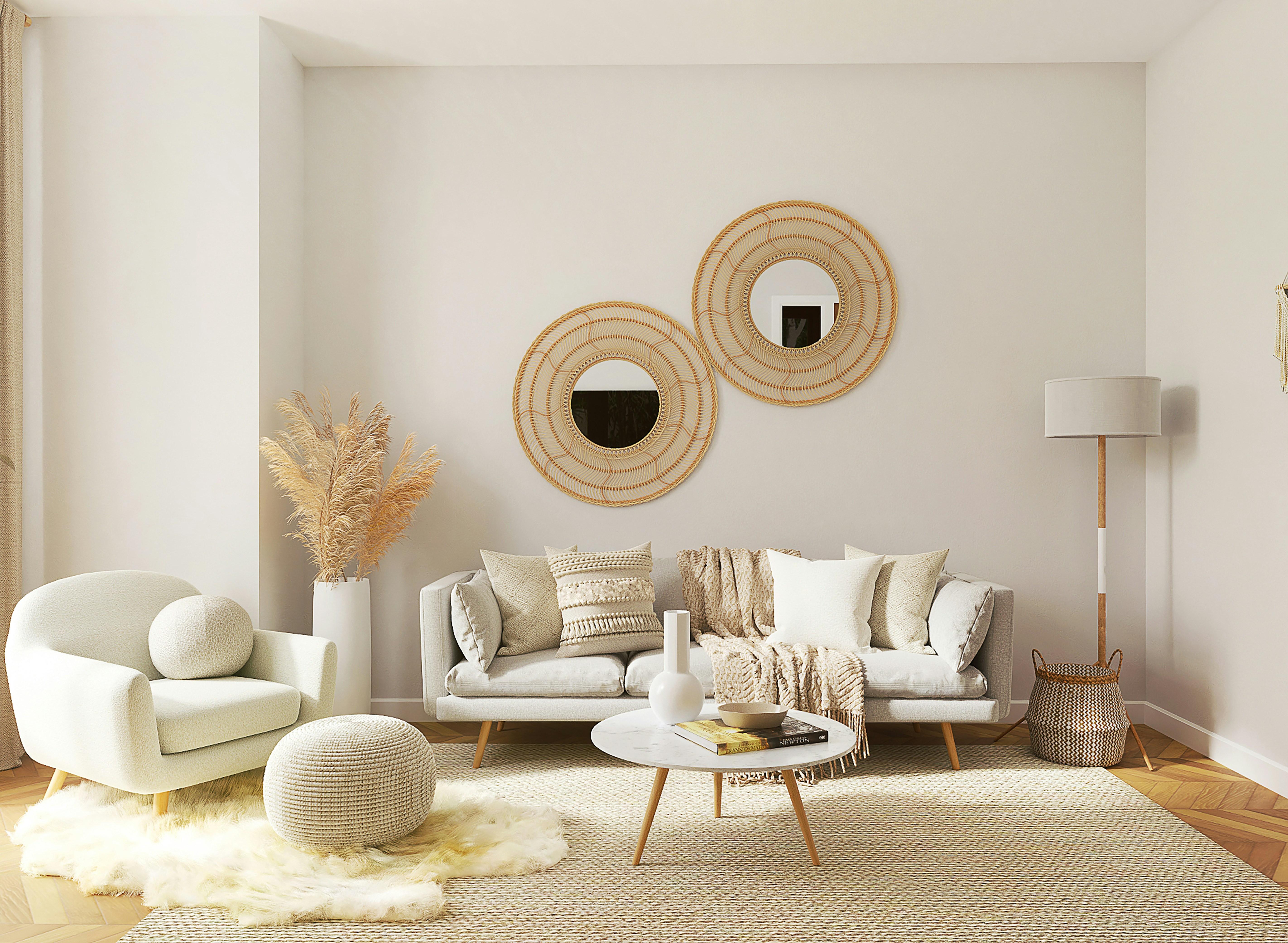
The most common mistake in a living room is too many seats. A sofa and four chairs creates a room that feels like a waiting area. Two or three well-chosen seats, arranged with intention, creates something to actually sit in.
Start with the sofa — it anchors the room. Choose one that fits the scale of the space, not one that fills it. A 220cm sofa in a modest room will always feel like it's apologising for itself.
Add one occasional chair at an angle. Not parallel to the sofa, not perpendicular — somewhere in between. This creates an implied conversation without forcing it.
A low coffee table. One side table. A floor lamp in the corner that puts light where the ceiling fixture can't reach.
That's the room. Resist the urge to fill the gaps. Negative space in a living room is not emptiness — it's room to breathe.
Rooms
The Dining Room as a Room Worth Designing
Dining rooms are often the last room people think carefully about and the first room guests notice. There's something worth correcting in that order.
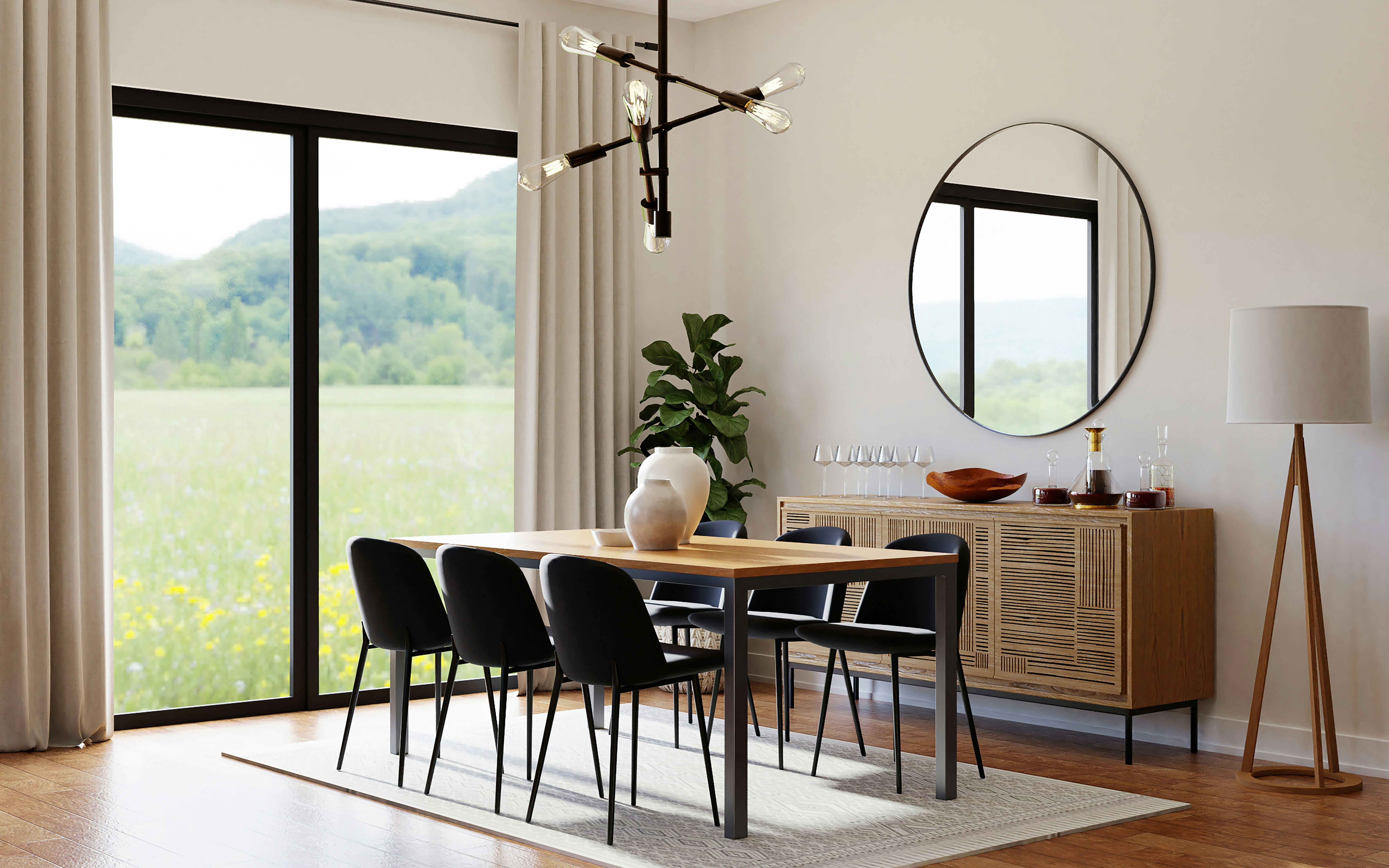
The table is the room. Everything else — chairs, lighting, sideboard — exists in relation to it. Choose the table first and size it honestly: 180cm seats six without crowding. 220cm seats eight. Don't buy a table for the dinner party you host once a year.
Chair selection is where most rooms go wrong. Matching chairs around a rectangular table creates a boardroom. We prefer two carver chairs at the heads and four side chairs along the length — it gives the table an axis without being formal about it.
Lighting should hang low. 70–80cm above the table surface. High pendants light the ceiling, not the food or the faces.
A sideboard against one wall. Storage, surface space, and somewhere to put a lamp that warms the room during dinner.
Designed properly, a dining room becomes the room people linger in longest.